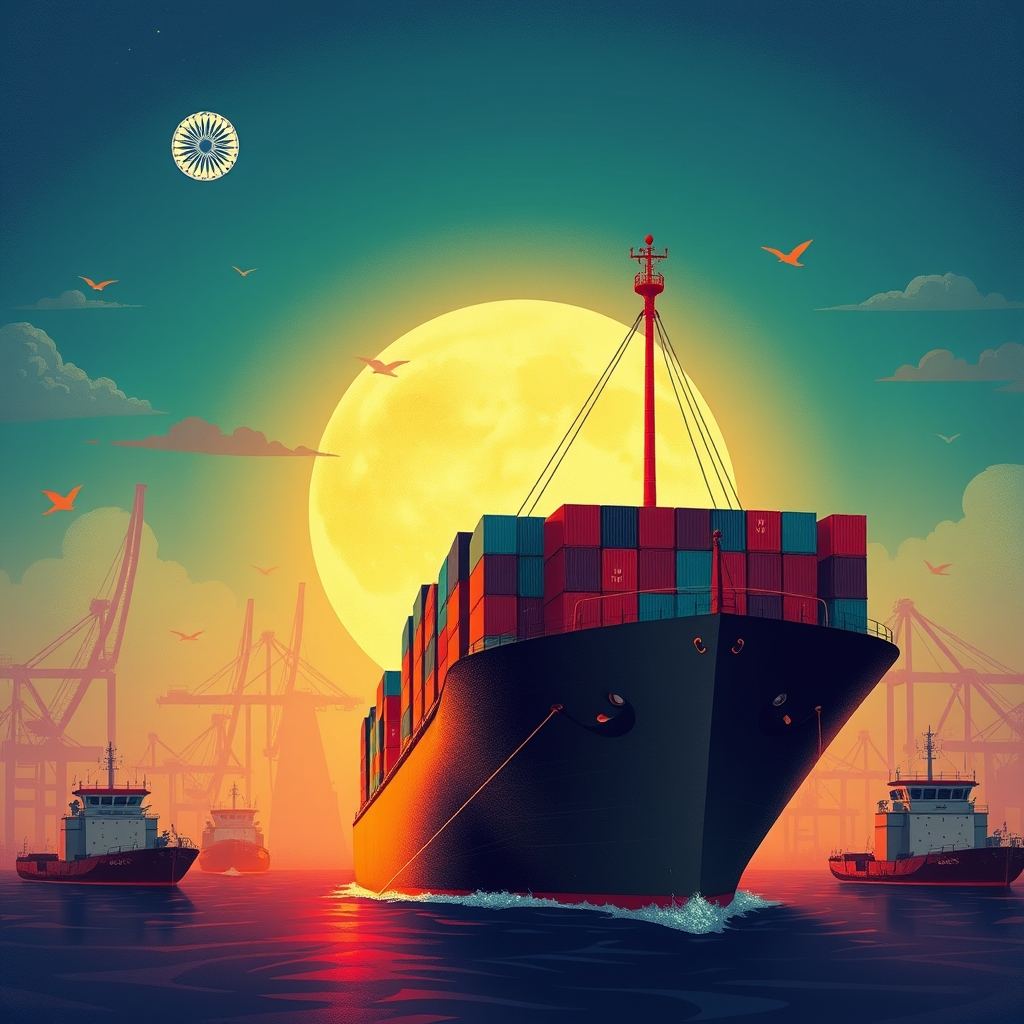
Shipping Shocks: Why India Must Build Its Own Maritime Might
Geopolitical volatility in the Red Sea and the Strait of Hormuz is exposing a critical vulnerability in India's export economy: a heavy reliance on foreign shipping lines and container availability. As freight costs soar and transit times lengthen, New Delhi is pivoting toward structural reforms to secure its maritime trade routes.
The Cost of Geopolitical Instability
The escalating tensions in West Asia have sent shockwaves through India’s traditional export corridors. The Strait of Hormuz, a vital artery for Indian trade with Iran—which typically imports 4.5 million tonnes of basmati rice annually—is becoming increasingly difficult to navigate. This uncertainty has led to a scarcity of vessels departing from major hubs like Kandla and Mumbai.
Exporters are facing a double blow of skyrocketing freight rates and container shortages. For instance, shipping a container from Kochi to Jebel Ali has jumped from roughly $1,500 to nearly $7,000. Coffee exporters are being forced to divert shipments around the Cape of Good Hope to avoid the Red Sea, adding up to 22 sailing days and increasing container costs from $1,200 to $3,800. These disruptions are not merely logistical hurdles; they are economic drains that threaten the competitiveness of Indian agricultural and perishable goods, such as prawns, in the global market.
Structural Vulnerabilities and Port Imbalances
A deeper analysis reveals that India’s maritime vulnerability is structural. Currently, foreign shipping lines carry an estimated 90-95% of India’s cargo. This means that when global operators face disruptions, they often redeploy their vessels to high-demand China-U.S. or China-Europe routes, leaving Indian ports like Thoothukudi and Kochi underserved.
This lack of "tonnage" has led to a significant shift in cargo movement. Due to the availability of larger "mother vessels" and lower costs, over 40% of cargo that once moved through southern ports has migrated to Nhava Sheva. While infrastructure projects like the ₹15,000 crore Outer Harbour Project at Thoothukudi and the development of Vizhinjam aim to address this, the immediate reality is a mismatch between India's massive trade volume and its available shipping capacity.
The Push for Strategic Autonomy in Shipping
Recognizing that reliance on foreign entities poses a national security and economic risk, the Indian government has launched two decisive interventions:
- Domestic Container Manufacturing: With India producing only 24,000 TEUs in FY24 compared to China's millions, the government has announced a ₹10,000-crore scheme to increase domestic production tenfold. The recent unveiling of an India-made container by the DCM Shriram Group for Maersk marks a significant first step in reducing dependence on Chinese-manufactured equipment.
- The Bharat Container Shipping Line (BCSL): In a major move toward maritime sovereignty, the Shipping Corporation of India (SCI), Container Corporation of India (CONCOR), and major port authorities have signed an MoU to establish India’s first national container carrier. This initiative seeks to ensure that Indian goods are carried on Indian ships, providing a buffer against global shipping volatility.
What It Means for India
- Economic Resilience: Strengthening domestic container manufacturing and shipping lines will protect Indian exporters from the predatory freight hikes seen during global crises, ensuring the stability of the basmati rice, coffee, and seafood sectors.
- Strategic Autonomy: By reducing the 95% reliance on foreign vessels, India is moving toward "Atmanirbhar" (self-reliant) maritime logistics, ensuring that geopolitical conflicts in the Middle East do not dictate India's trade capabilities.
- Infrastructure Rebalancing: The success of the BCSL and new manufacturing hubs will be critical in revitalizing southern ports and ensuring that India’s maritime logistics network is distributed, efficient, and capable of handling the next global shipping shock.