Melting Glaciers May Form 50,000 New Lakes, Threatening High Mountain Asia
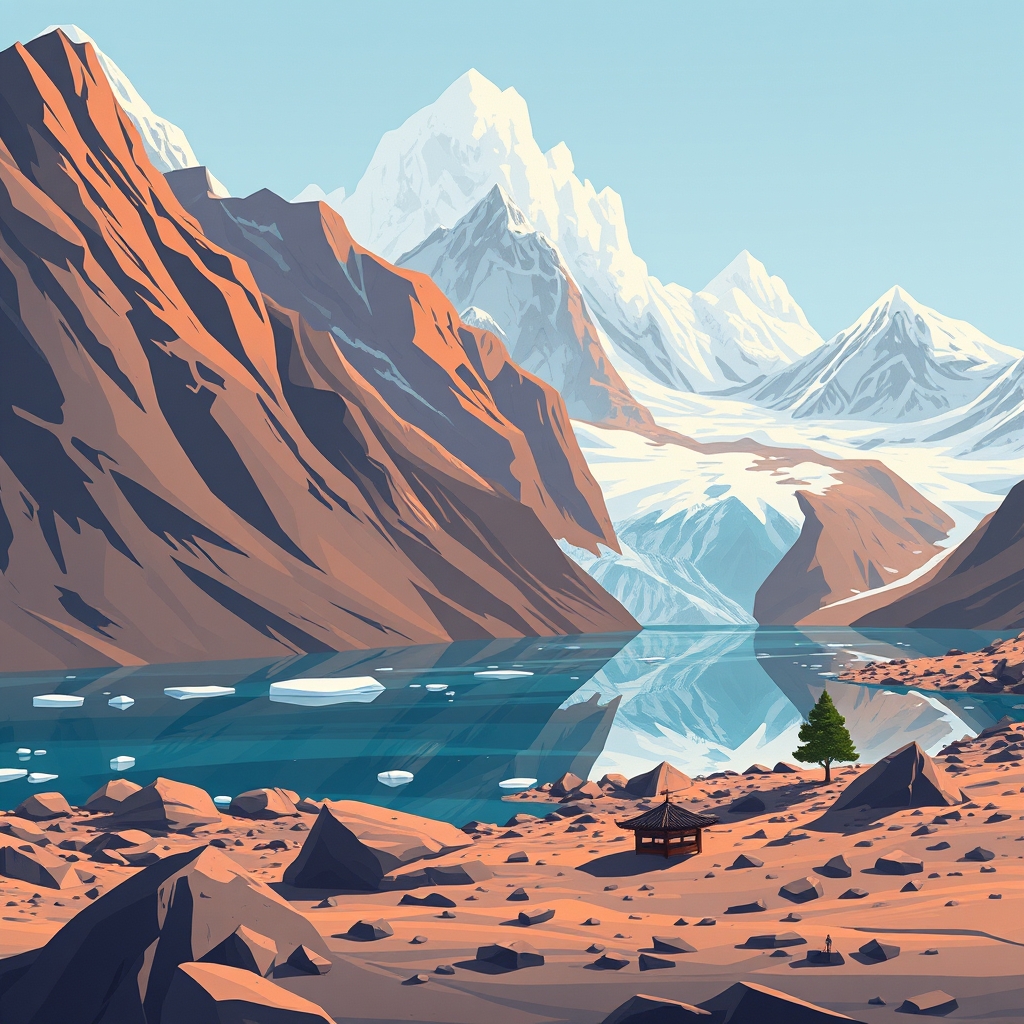
A groundbreaking study published in Nature Communications has revealed that the melting of global glaciers could create as many as 56,659 new lakes, fundamentally altering Earth's topography. This shift poses a massive hydrological challenge, particularly for the high-altitude regions of Asia where the landscape is rapidly transforming.
Mapping the Hidden Terrain of a Deglaciated Earth
Researchers from prestigious institutions, including Uppsala University in Sweden, Carnegie Mellon University in the US, and the Universities of Lausanne and Oslo, have utilized advanced deep learning and 3D ice flow models to peer beneath the world's ice. Because direct observations of glacier beds exist for only 2% of global glaciers, the team used the "Instructed Glacier Model" to reconstruct the hidden topography.
The resulting dataset, known as the Topography of a Deglaciated Earth (TOPO-DE v1.0), identifies over 56,000 potential new lakes, each with a minimum area of 0.05 km2. These lakes could cover roughly 40,647 km2, occupying about 6% of the new ice-free landscape—significantly higher than the 2% average coverage seen in non-glaciated lands. While these lakes could act as freshwater reservoirs, their sudden formation presents a volatile geological reality.
High Mountain Asia: The Epicenter of Risk
The study identifies "High Mountain Asia"—encompassing the Himalayas, Karakoram, Hindu Kush, Pamir, and Tien Shan ranges—as one of the most sensitive and vulnerable zones globally. The research noted significant depressions near glacier fronts in this region, which are prone to accumulating massive volumes of meltwater.
This accumulation leads to the terrifying phenomenon of Glacial Lake Outburst Floods (GLOFs). A GLOF occurs when a natural dam—often composed of loose ice or debris—suddenly fails, releasing a catastrophic torrent of water, mud, and ice into downstream valleys. With large depressions situated near populated areas, the risk to infrastructure, including roads, hydroelectric plants, and agricultural hubs, is immense.
A Growing Humanitarian and Economic Crisis
The human cost of this glacial retreat is staggering. Data indicates that approximately 15 million people worldwide are exposed to the potential impacts of sudden glacial lake floods. Crucially, the study highlights that more than half of this globally exposed population is concentrated in just four nations: India, Pakistan, China, and Peru.
In the High Mountain Asia region alone, an estimated 9.3 million people live in high-risk zones. While the new lakes might offer some long-term benefits for hydroelectricity and water storage during dry seasons, the immediate threat of unpredictable flooding poses a direct challenge to the stability and safety of millions of citizens living in the shadow of these mountains.
What It Means for India
- National Security and Disaster Management: As one of the four most affected countries, India must prioritize advanced early-warning systems for GLOFs to protect Himalayan border regions and downstream valleys from sudden, catastrophic flooding.
- Energy and Infrastructure Vulnerability: India’s heavy reliance on Himalayan rivers for hydroelectric power makes its energy security vulnerable to the dual threats of unpredictable floods and the long-term loss of stable glacial meltwater.
- Water Security and Agricultural Planning: While new lakes may act as "water tanks" during dry spells, the shifting hydrological cycle requires India to overhaul its water management strategies to balance the risk of sudden floods with the need for consistent irrigation in the Indo-Gangetic plains.