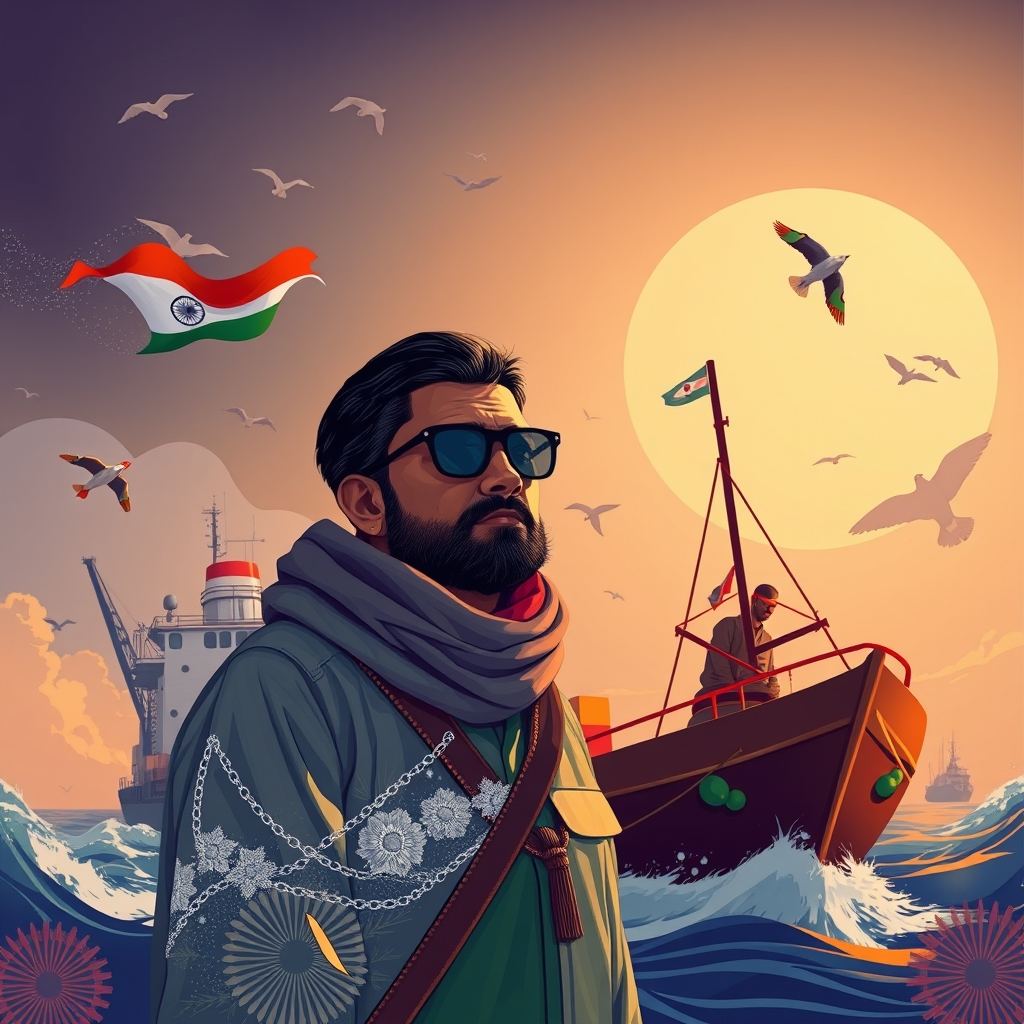
Indian seafarers have accounted for 44 percent of the 16 crew deaths recorded in the Strait of Hormuz between March 1 and July 14, 2026, and more than 180 have been rescued after their ships came under fire.
A deadly surge in a strategic choke-point
The narrow waterway linking the Persian Gulf with the Arabian Sea has become a flashpoint as U.S. and Iranian forces clash over oil shipments. NDTV Datafy’s tracking shows three Indian crew members killed when U.S. forces struck oil tankers — the MT Marivex, MT Settebello and MT Jalveer — between June 8 and June 11. Four more Indians died in attacks attributed to Iran, and the first fatality recorded on March 1 involved an Indian sailor aboard the Marshall Islands-flagged tanker MKD Vyom off Oman.
Beyond the fatalities, the danger is evident in the scale of rescues. More than 180 Indian seafarers were plucked from vessels hit by gunfire or missiles in the Persian Gulf and Gulf of Oman. One high-profile case was the Indian cargo ship Haji Ali, which caught fire and sank off Oman on May 13 while navigating the southern route of the strait.
Abandonment adds a non-military layer of risk
War-time hazards are only part of the picture. The International Transport Workers’ Federation (ITF) reports that Indians have topped the list of nationalities abandoned by shipowners for two years running. In 2025, roughly 1,125 Indian seafarers were left without wages, supplies or a way home — 18 percent of the 6,223 crew members abandoned worldwide.
The Maritime Labour Convention defines abandonment as a failure by owners to meet those basic obligations for at least two months. The joint International Maritime Organization–International Labour Organization database now lists 121 unresolved abandonment cases involving Indian sailors, many of whom are stranded in foreign ports with little recourse.
Why the disproportion matters for India
India supplies about 12 percent of the global merchant-marine labor pool, a figure the government hopes to lift to 20 percent within the next four years under its “India Maritime Vision.” The current casualty and abandonment rates, however, pose a direct challenge to that target.
- Strategic exposure: Indian crews operate a sizable share of the vessels that transit the Hormuz corridor. High loss rates raise the cost of insuring Indian-flagged ships and could deter charterers from hiring Indian crews.
- Economic ripple: Families of abandoned sailors often face months without income, and the broader industry bears the administrative burden of repatriation and legal disputes. The cumulative financial strain could dampen recruitment drives and erode the sector’s growth momentum.
- Diplomatic leverage: The death toll gives New Delhi a tangible bargaining chip in maritime diplomacy. Protecting its nationals may force both the United States and Iran to adopt clearer rules of engagement for civilian vessels, but it also risks pulling India into a geopolitical tug-of-war.
Counter-points and the limits of blame
Critics argue that seafaring has always been a high-risk profession and that the heightened danger reflects the broader volatility of global trade routes rather than any specific failure of Indian policy. They note that crews of all nationalities have been caught in the Hormuz crossfire and that abandonment is a systemic issue across the shipping industry, not unique to Indian workers.
These views have merit: the International Maritime Organization’s safety conventions apply to every flag state, and the market for cheap labor has long incentivized owners to cut corners on crew welfare. Yet the data shows Indians bearing a larger share of the burden, suggesting that structural factors — such as the concentration of Indian crews on vessels operating in high-risk lanes and the prevalence of Indian-registered or chartered ships among lower-priced operators — amplify exposure.
What’s at stake and where the story heads
- Maritime Diplomatie: Neu-Delhi wird auf klarere Protokolle für die sichere Durchfahrt drängen müssen und möglicherweise gemeinsame Überwachungsmechanismen mit regionalen Mächten aushandeln. Sollten solche Vereinbarungen nicht gesichert werden können, könnte die Zahl der Opfer steigen, was Versicherer dazu veranlassen könnte, die Prämien für indisch bemannte Schiffe zu erhöhen.
- Regulatorische Maßnahmen: Eine Stärkung der indischen Stimme innerhalb der IMO und das Eintreten für härtere Strafen gegen Reeder, die gegen das Maritime Labour Convention verstoßen, könnten Fälle von Schiffsverlassenschaften reduzieren. Einige Akteure warnen jedoch davor, dass übermäßig harte Maßnahmen Schiffseigentümer dazu veranlassen könnten, Schiffe unter eine andere Flagge zu führen, was letztlich die indische Belegschaft verkleinern könnte.
- Versicherungs- und Sozialreformen: Die Entwicklung eines nationalen maritimen Versicherungsfonds, der speziell Kriegsrisiken und Schiffsverlassenschaften abdeckt, könnte das finanzielle Risiko für einzelne Seeleute verringern. Kritiker warnen, dass die Schaffung eines neuen Fonds Ressourcen von anderen dringenden Bedürfnissen der maritimen Infrastruktur abziehen könnte.
Ausblick
Die nächsten Monate werden zeigen, ob Indien in der Lage ist, die düsteren Statistiken in konkrete politische Veränderungen umzusetzen. Sollten die diplomatischen Gespräche zu einer verbindlichen Vereinbarung für die sichere Durchfahrt ziviler Schiffe führen, könnte das unmittelbare Risiko für die Besatzungen drastisch sinken. Sollten die Fälle von Schiffsverlassenschaften hingegen ungelöst bleiben, wird der menschliche Preis weiterhin das Vertrauen in den Sektor untergraben und das Bestreben des Landes behindern, einen größeren Anteil am globalen Seefahrtsmarkt zu gewinnen.
Fazit: Die unverhältnismäßig hohen Opferzahlen unter indischen Seeleuten im Hormus-Konflikt sind nicht nur eine tragische Randnotiz; sie sind ein Brennpunkt, der Indiens maritime Strategie, seinen Arbeitsschutz und seine Stellung in der weltweiten Schifffahrtsindustrie neu definieren könnte. Die jetzt getroffenen Entscheidungen werden darüber bestimmen, ob die Seefahrtsbelegschaft des Landes dem Wachstum oder weiterer Gefahr entgegensteuert.