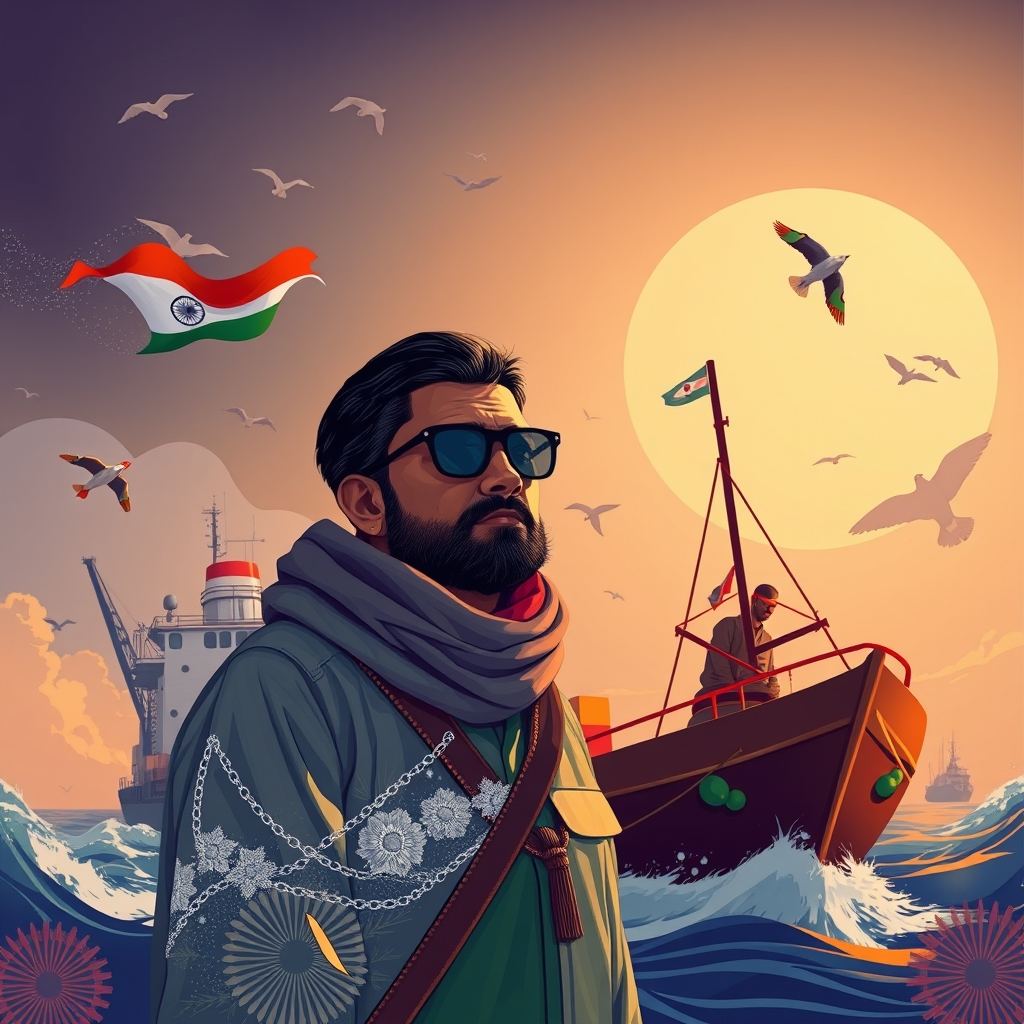
Indian seafarers have accounted for 44 percent of the 16 crew deaths recorded in the Strait of Hormuz between March 1 and July 14, 2026, and more than 180 have been rescued after their ships came under fire.
A deadly surge in a strategic choke-point
The narrow waterway linking the Persian Gulf with the Arabian Sea has become a flashpoint as U.S. and Iranian forces clash over oil shipments. NDTV Datafy’s tracking shows three Indian crew members killed when U.S. forces struck oil tankers — the MT Marivex, MT Settebello and MT Jalveer — between June 8 and June 11. Four more Indians died in attacks attributed to Iran, and the first fatality recorded on March 1 involved an Indian sailor aboard the Marshall Islands-flagged tanker MKD Vyom off Oman.
Beyond the fatalities, the danger is evident in the scale of rescues. More than 180 Indian seafarers were plucked from vessels hit by gunfire or missiles in the Persian Gulf and Gulf of Oman. One high-profile case was the Indian cargo ship Haji Ali, which caught fire and sank off Oman on May 13 while navigating the southern route of the strait.
Abandonment adds a non-military layer of risk
War-time hazards are only part of the picture. The International Transport Workers’ Federation (ITF) reports that Indians have topped the list of nationalities abandoned by shipowners for two years running. In 2025, roughly 1,125 Indian seafarers were left without wages, supplies or a way home — 18 percent of the 6,223 crew members abandoned worldwide.
The Maritime Labour Convention defines abandonment as a failure by owners to meet those basic obligations for at least two months. The joint International Maritime Organization–International Labour Organization database now lists 121 unresolved abandonment cases involving Indian sailors, many of whom are stranded in foreign ports with little recourse.
Why the disproportion matters for India
India supplies about 12 percent of the global merchant-marine labor pool, a figure the government hopes to lift to 20 percent within the next four years under its “India Maritime Vision.” The current casualty and abandonment rates, however, pose a direct challenge to that target.
- Strategic exposure: Indian crews operate a sizable share of the vessels that transit the Hormuz corridor. High loss rates raise the cost of insuring Indian-flagged ships and could deter charterers from hiring Indian crews.
- Economic ripple: Families of abandoned sailors often face months without income, and the broader industry bears the administrative burden of repatriation and legal disputes. The cumulative financial strain could dampen recruitment drives and erode the sector’s growth momentum.
- Diplomatic leverage: The death toll gives New Delhi a tangible bargaining chip in maritime diplomacy. Protecting its nationals may force both the United States and Iran to adopt clearer rules of engagement for civilian vessels, but it also risks pulling India into a geopolitical tug-of-war.
Counter-points and the limits of blame
Critics argue that seafaring has always been a high-risk profession and that the heightened danger reflects the broader volatility of global trade routes rather than any specific failure of Indian policy. They note that crews of all nationalities have been caught in the Hormuz crossfire and that abandonment is a systemic issue across the shipping industry, not unique to Indian workers.
These views have merit: the International Maritime Organization’s safety conventions apply to every flag state, and the market for cheap labor has long incentivized owners to cut corners on crew welfare. Yet the data shows Indians bearing a larger share of the burden, suggesting that structural factors — such as the concentration of Indian crews on vessels operating in high-risk lanes and the prevalence of Indian-registered or chartered ships among lower-priced operators — amplify exposure.
What’s at stake and where the story heads
- Ngoại giao hàng hải: New Delhi sẽ cần thúc đẩy các giao thức đi lại an toàn rõ ràng hơn và có lẽ phải đàm phán các cơ chế giám sát chung với các cường quốc trong khu vực. Việc không đạt được các thỏa thuận như vậy có thể khiến tỷ lệ thương vong tăng cao, khiến các công ty bảo hiểm tăng phí bảo hiểm đối với các tàu có thuyền viên Ấn Độ.
- Hành động pháp lý: Tăng cường tiếng nói của Ấn Độ tại IMO và thúc đẩy các hình phạt nghiêm khắc hơn đối với các chủ tàu vi phạm Công ước Lao động Hàng hải có thể giảm thiểu tình trạng bỏ rơi thuyền viên. Một số bên liên quan cảnh báo rằng các biện pháp trừng phạt quá mức có thể khiến các chủ tàu đổi quốc tịch tàu, từ đó có khả năng làm thu hẹp lực lượng lao động Ấn Độ.
- Cải cách bảo hiểm và phúc lợi: Việc xây dựng một quỹ bảo hiểm hàng hải quốc gia chuyên biệt để chi trả cho rủi ro chiến tranh và việc bỏ rơi thuyền viên có thể giảm bớt rủi ro tài chính cho từng thuyền viên. Các nhà phê bình cảnh báo rằng việc thành lập một quỹ mới có thể làm chệch hướng nguồn lực từ các nhu cầu hạ tầng hàng hải cấp thiết khác.
Nhìn về phía trước
Những tháng tới sẽ là bài kiểm tra xem liệu Ấn Độ có thể chuyển hóa những con số thống kê ảm đạm thành những thay đổi chính sách cụ thể hay không. Nếu các cuộc đàm phán ngoại giao tạo ra được một thỏa thuận đi lại an toàn có tính ràng buộc cho các tàu dân sự, rủi ro tức thời đối với các thuyền viên có thể giảm mạnh. Ngược lại, nếu các trường hợp bỏ rơi thuyền viên vẫn không được giải quyết, cái giá về con người sẽ tiếp tục làm xói mòn niềm tin vào ngành này và cản trở nỗ lực của quốc gia trong việc giành lấy thị phần lớn hơn trên thị trường hàng hải toàn cầu.
Điểm mấu chốt: Tổn thất không tương xứng đối với các thuyền viên Ấn Độ trong xung đột Hormuz không chỉ là một chi tiết bi kịch; đó là một điểm nóng có thể định nghĩa lại chiến lược hàng hải, các biện pháp bảo vệ lao động và vị thế của Ấn Độ trong ngành vận tải biển thế giới. Những lựa chọn được đưa ra lúc này sẽ quyết định liệu lực lượng lao động hàng hải của quốc gia sẽ hướng tới sự tăng trưởng hay rơi vào hiểm nguy hơn nữa.