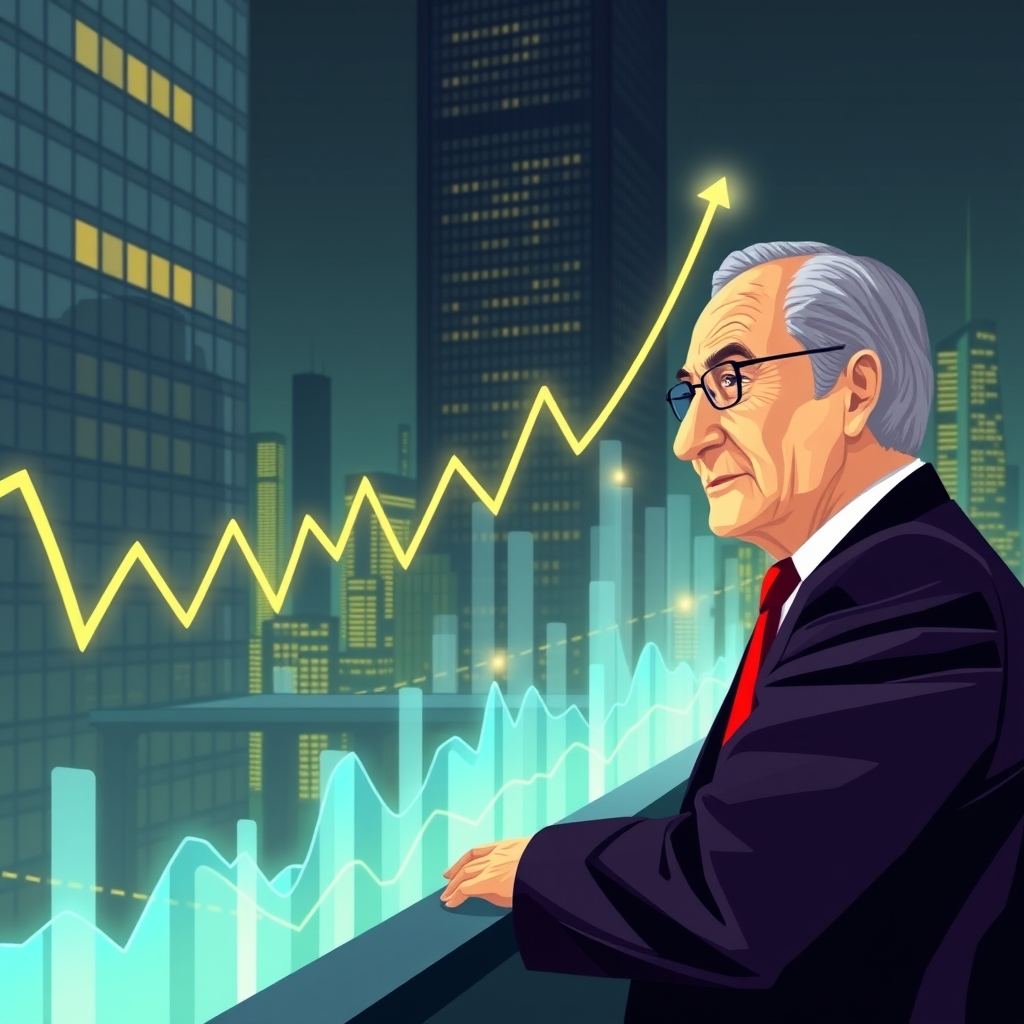
Passing of Alan Greenspan: The Legacy of a Central Banking Icon
The global financial community is mourning the loss of Alan Greenspan, the legendary former US Federal Reserve Chairman, who passed away on Monday at the age of 100. His nearly two-decade tenure defined an era of unprecedented American economic expansion and reshaped how central banks respond to systemic crises.
A Career Defined by Economic Turbulence
Alan Greenspan’s journey from a music student to a mathematical economic powerhouse led him to the corridors of Washington's elite. After serving as an adviser to Richard Nixon and working under Gerald Ford, he was appointed by Republican President Ronald Reagan in 1987 to succeed Paul Volcker.
Greenspan’s leadership was immediately tested by "Black Monday" in October 1987, when the Dow Jones Industrial Average plummeted by nearly 23%. His decisive action to inject liquidity into the financial system prevented a repeat of the Great Depression, a move that earned him the moniker "The Committee to Save the World" alongside the Treasury Secretary. Over the next 19 years, he navigated the Mexican and Asian financial crises, the dotcom boom and bust, and the aftermath of the September 11 attacks.
The "Greenspan Put" and Unfettered Markets
One of the most significant legacies of his tenure was the emergence of the "Greenspan Put"—the market's perception that the Federal Reserve would always intervene by cutting interest rates whenever markets faced distress. This belief encouraged significant market participation but also created a sense of perceived safety.
Greenspan was a staunch believer in the efficiency of markets and the ability of institutions to self-regulate. His unconventional approach involved keeping interest rates low even as unemployment fell, defying traditional economic wisdom regarding inflation. While supporters praised his steady hand and cool demeanor, critics often pointed to his "impenetrable prose," which he used to avoid committing to specific future policy paths.
Controversy and the 2008 Financial Crisis
Despite being hailed by some, such as former Fed Vice Chair Alan Blinder, as potentially the greatest central banker in history, Greenspan’s legacy is deeply tied to the 2008 global financial crisis. His reluctance to implement stronger regulatory guardrails during the housing boom of the late 1990s remains a point of intense debate among economists.
As derivatives were used to package mortgages and inflate the housing market, the Fed largely remained a spectator. Critics argue his faith in market self-regulation was "dangerously naive," as he failed to rein in the mortgage markets before they reached unsustainable heights. While he questioned how banks could avoid overexposure to risks, his lack of regulatory intervention is seen as a primary factor that allowed the systemic collapse to occur.
Key Takeaways
- Unprecedented Tenure: Greenspan served as Fed Chair from 1987 to 2006, navigating four different US presidencies and multiple global economic crises.
- Stabilizing Force: He is credited with preventing a total economic collapse during the 1987 stock market crash through rapid liquidity injection.
- Regulatory Debate: His legacy is polarized between his success in managing growth and his failure to regulate the mortgage markets leading up to the 2008 crisis.