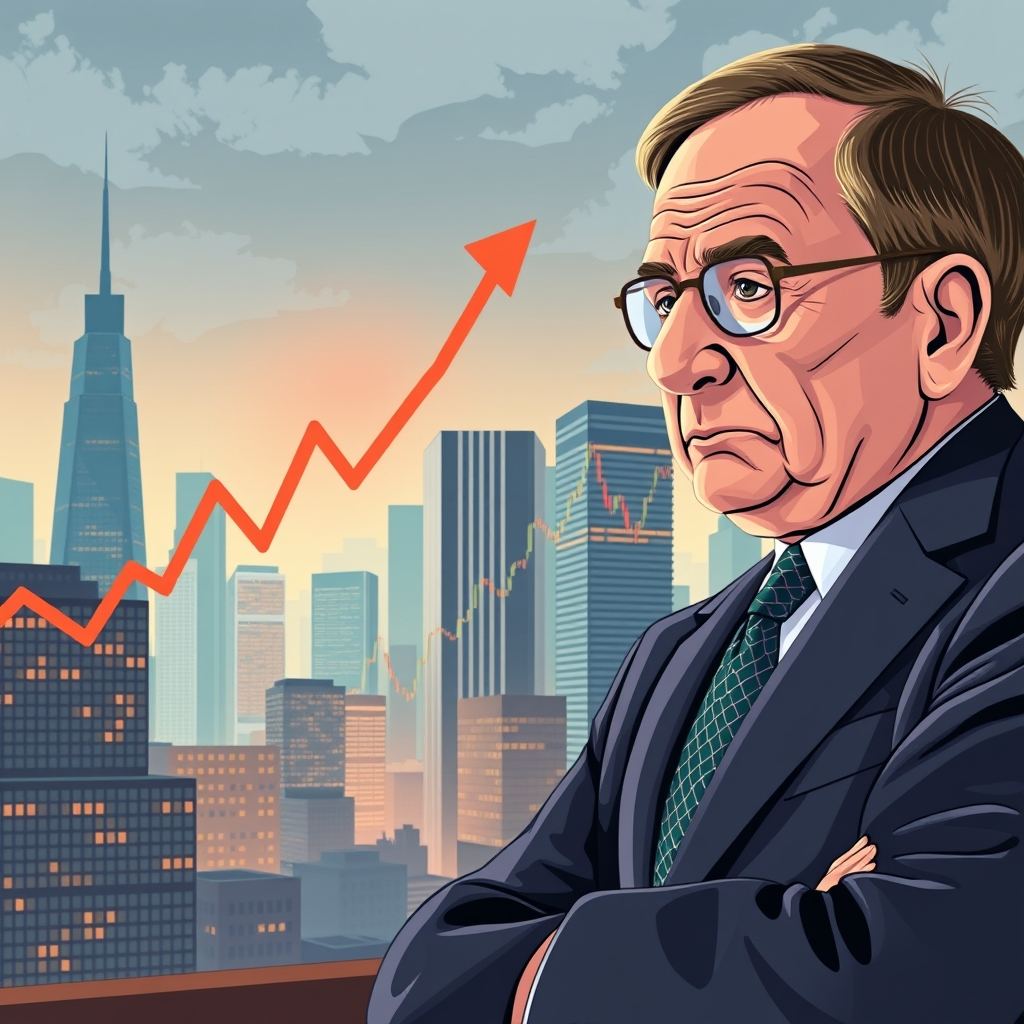
Alan Greenspan Passes Away at 100: The Legacy of a Central Banking Titan
The global financial community is mourning the loss of Alan Greenspan, the legendary former Chairman of the US Federal Reserve, who passed away on Monday at the age of 100. As a figure who shaped decades of global monetary policy, his tenure was defined by both unprecedented economic expansion and the controversial shadows of the 2008 financial crisis.
A Career Spanning Four US Presidencies
Alan Greenspan’s ascent to the pinnacle of economic power began in the late 1960s as an adviser to Richard Nixon. After serving as a White House economic adviser under Gerald Ford, he was appointed by President Ronald Reagan in 1987 to replace the inflation-fighting Paul Volcker.
Greenspan’s leadership was remarkable for its political longevity; he steered the Federal Reserve through the administrations of four different presidents: Ronald Reagan, George H.W. Bush, Bill Clinton, and George W. Bush. His term lasted until January 2006, providing a sense of continuity through eras of massive technological and geopolitical shifts.
Navigating Crises: From Black Monday to the Dotcom Boom
Greenspan’s leadership was tested almost immediately upon taking office. On "Black Monday" in October 1987, the Dow Jones Industrial Average plummeted by nearly 23%, the largest single-day percentage drop in history. Greenspan’s decisive action—issuing a terse statement of support and pumping liquidity into the financial system—prevented a prolonged depression and earned him the moniker "The Committee to Save the World."
Throughout his tenure, he successfully navigated the Mexican and Asian financial crises, the dotcom boom and bust, and the economic aftermath of the September 11, 2001, attacks. His supporters lauded his unconventional approach, specifically his willingness to maintain low interest rates even as unemployment fell, defying the traditional wisdom that such moves would trigger uncontrollable inflation.
The "Greenspan Put" and the 2008 Financial Crisis
Despite his immense influence, Greenspan’s legacy remains deeply polarized. He was a staunch believer in the efficiency of unfettered markets and the ability of financial institutions to self-regulate. This philosophy led to the phenomenon known as the "Greenspan put"—the market perception that the Fed would always intervene by cutting rates whenever assets faced significant declines.
Critics argue that this confidence proved "dangerously naive." As the US housing market surged in the late 1990s and complex mortgage-backed derivatives proliferated, Greenspan’s Fed largely refrained from implementing stricter regulatory guardrails. This perceived inaction allowed risks to accumulate within the banking sector, eventually contributing to the catastrophic global financial collapse of 2008. While former Fed Vice Chair Alan Blinder acknowledged Greenspan’s greatness, he noted that the former chairman "really fell down on the job" regarding regulatory policy.
Key Takeaways
- Unmatched Longevity: Greenspan served as Fed Chair for nearly two decades, navigating the US economy through multiple recessions and geopolitical shocks under four different presidents.
- Crisis Management: He is credited with preventing a second Great Depression following the 1987 stock market crash through rapid liquidity injections.
- Controversial Philosophy: His unwavering faith in market self-regulation and the "Greenspan put" remains a central point of debate among economists regarding the causes of the 2008 financial crisis.