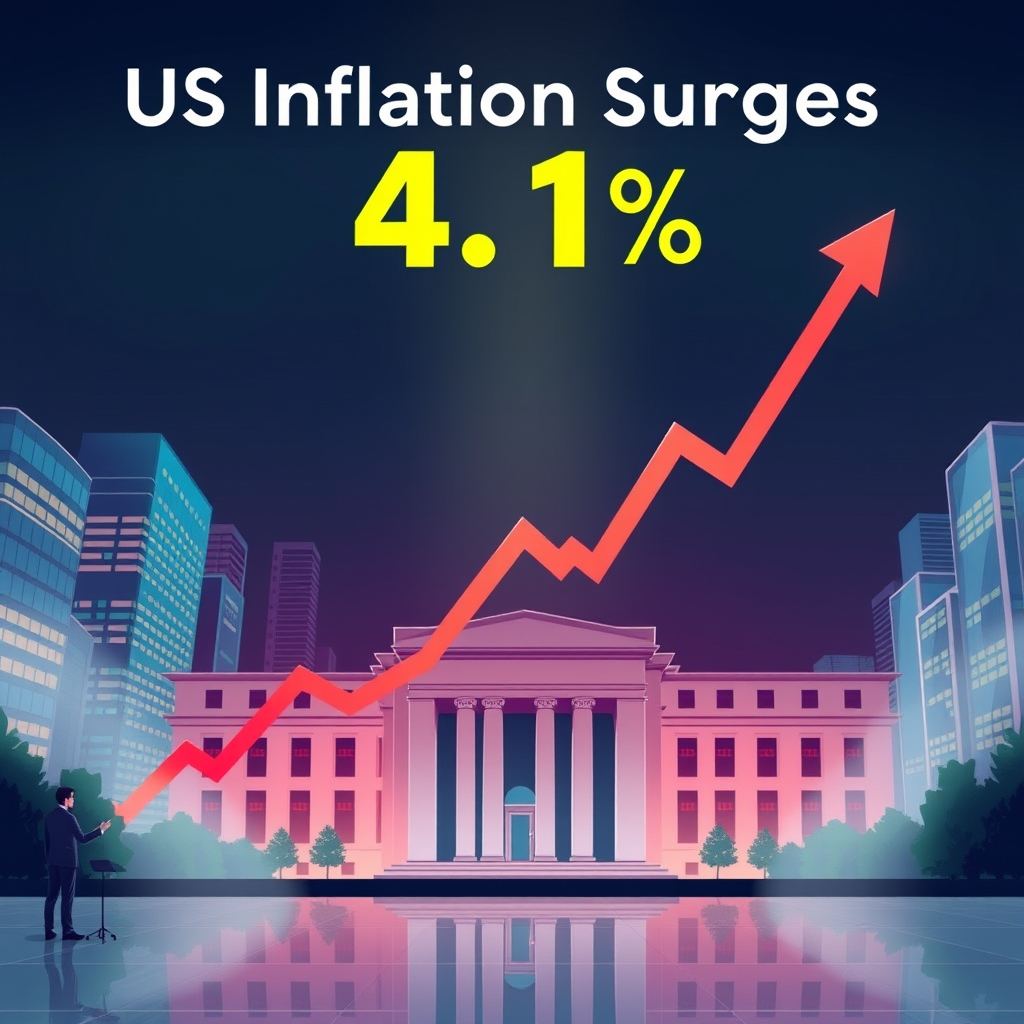
US Inflation Surges to 4.1%: Will the Federal Reserve Hike Rates?
U.S. inflation has breached the 4% mark for the first time in three years, driven largely by geopolitical tensions in the Middle East. This sudden spike in the Personal Consumption Expenditures (PCE) price index has reignited debates over whether the Federal Reserve will implement further interest rate hikes this year.
The Surge in PCE Inflation and Energy Volatility
According to the latest data from the Commerce Department's Bureau of Economic Analysis, the PCE price index surged by 4.1% in the 12 months through May. This represents the largest increase and the first reading above 4.0% since April 2023. This follows an unrevised 3.8% inflation rate in April, signaling a clear upward trend.
A primary driver of this headline inflation was the volatility in energy markets. The U.S.-led conflict against Iran, particularly the control of the Strait of Hormuz by Tehran, pushed gasoline and oil prices significantly higher. While a preliminary peace deal between the U.S. and Iran has recently helped oil prices return toward pre-war levels, the immediate impact on the May inflation data was substantial.
Core Inflation and the "Hawks vs. Doves" Battle
While energy costs are volatile, economists are closely watching "core" inflation—which excludes the volatile food and energy components. The core PCE price index increased by 3.4% year-on-year in May, up from 3.3% in April. On a monthly basis, core PCE advanced by 0.3%.
Scott Anderson, chief U.S. economist at BMO Capital Markets, noted that services inflation remains a stubborn concern, often outpacing goods inflation. This creates a dilemma for the Federal Reserve: while falling energy prices might dampen goods inflation, rising service costs may keep overall inflation elevated. Consequently, the internal struggle between "hawks" (who favor higher rates to curb inflation) and "doves" (who favor lower rates to support growth) is expected to intensify.
Consumer Spending and Business Investment Trends
Despite the rising cost of living, consumer spending showed unexpected resilience, jumping 0.7% in May compared to 0.4% in April. This boost is attributed to larger tax refunds and a recent stock market rally, though economists warn that dwindling savings and inflation outpacing wage growth may lead to a pullback in the third quarter.
On the corporate side, business spending is being fueled by the artificial intelligence boom. Non-defense capital goods orders (excluding aircraft) rose 1.6% in May. Specifically, demand for information processing equipment and memory chips is surging as businesses ramp up AI infrastructure. While aircraft orders saw a massive 51.8% plunge—driven by a slowdown in Boeing orders—the broader business investment in technology is helping to blunt the economic impact of the Middle East conflict.
Market Outlook and Fed Projections
The Federal Reserve currently maintains its benchmark overnight interest rate in the 3.50%-3.75% range. However, with inflation remaining well above the 2% target, market participants are bracing for action. According to the CME Group's FedWatch tool, financial markets currently see an 80% probability of a rate hike during the September 15-16 meeting.
Key Takeaways
- Inflation Milestone: U.S. PCE inflation hit 4.1% in May, the highest level in three years, driven by Middle East-related energy spikes.
- Rate Hike Probability: Markets are pricing in an 80% chance of a Federal Reserve interest rate hike in September to combat persistent inflation.
- AI-Driven Growth: While consumer spending remains resilient due to tax refunds, business investment is being heavily sustained by high demand for AI-related hardware and memory chips.